
Spike Lee’s new film, Do the Right Thing, depicts racial tensions on the hottest day of the summer in the Bedford-Stuyvesant side of Brooklyn, NY. The film ends with the killing of a black man by the police and a riot, which destroys a local establishment. It is important to note that the films portrayal of African-Americans, racism and violence are illustrated in an artistic manner to display culture and history. I am inviting you all to explore issues raised by this film with me as I go through some of the most iconic scenes.
 The Chorus: Mister Senor Love Daddy played by Samuel L. Jackson.
This character represented the chorus that we would usually see in a Greek tragedy. He shared commentary on the situations and actions of the block from waking people up with his radio show to seeing different characters outside to ordering his lunch and finally getting it delivered by Mookie to the afterwards of the riot. This radio DJ is one of many parts of the cultural and artistic features of this film. He wears colorful clothing and speaks his mind; like a Greek tragedy he is a first hand reporter with recitations of news and comic relief. He even plays music from the radio station that broadcast out to the neighborhood which overlay the transition between and during scenes.
 Street Art: “Tawana Told The Truth”
This racially influenced background is in reference to the Tawana Brawley case of 1987, where an African-American women from Wappingers Fall, NY was found in a trash bag, several feet from an apartment where she lived at the time with racial slurs written on her body and covered in feces. She accused six white men of raping her. The charges she pressed against them gained national attention, mainly because of her age (15 years old). The media received heated criticism from the African-American community while Tawana was, not only victimized in her accusations but also, charged for defamation of character to her abusers. She did not win the case with suspicions that she attended a party and jumped in the trash bag on her own, as well, that the feces came from a neighborhood dog. Things were indeed complicated and caused mistrust in the black community from certain legal allegations.
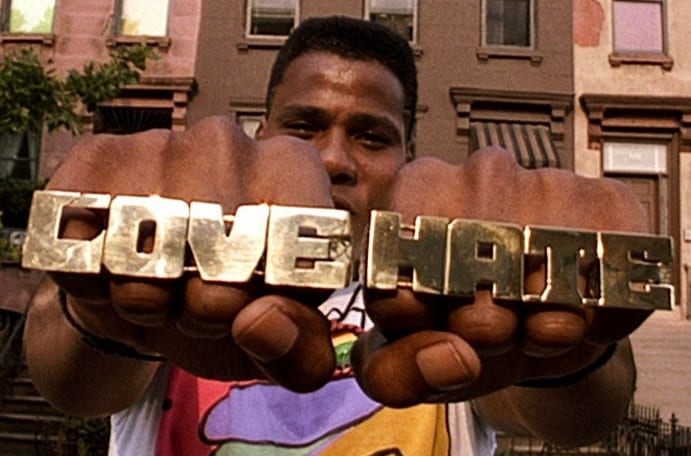
Public Enemy “Fight the Power”: Radio Raheem played by Bill Nunn
The song, Fight the Power, that Radio Raheem plays on his huge boom box throughout the film was used during the late 1980’s to create a message of unification, not only within the black community, but with all races in the neighborhood: blacks, Puerto Ricans, and Italians. Radio Raheem and Buggin’ Out get into an argument with Sal about there not being enough black people on the walls of his establishment, Sal’s Pizza. The police show up after Sal destroys Radio Raheems boom box. They choke Radio Raheem to death. A riot breaks out after this when Mookie tosses a trash can through the window of Sal’s Pizza Place, as a symbol of destroying social injustice; because the potential for social justice has been killed by the power of “the man” we must rise together against “the establishment” and “the man.”
FIGHT THE POWER! DO THE RIGHT THING!
